


 Mirrors, luggage, garment bags, thermos flasks...
 Floor mats, gym bags, reusable bottles, bricks…


 Gift vouchers


Find out everything about the Sufi whirling dance also known as the whirling dervish dance or the whirling dance
Thanks to Narjès KEL, Sufi dancer and trainer within the Orphélya association, for her cultural and fascinating answers to our interview.
When and how was the Sufi whirling dance born? What are its origins?

More than a custom, it is a real discipline which finds its origin in Sufism (Muslim mysticism) and which was practiced starting from the 9th century in Baghdad.
One day, the great spiritual master and Persian poet of the 13th Century, Rumi (Mowlana Jalal-od-Din), was seized with ecstasy and began to dance and spinning on himself. He received lots of inspiration in the form of verse that he put in poems that are now known worldwide. After his death, his followers founded the Mevlevi order, known as the Whirling Dervishes of Turkey. This Sufi brotherhood is distinguished from the others by the importance given to the whirling dance to achieve mystical union, and to their spiritual leader's poems. Only men are allowed to dance within this order.
Sufi dance is also practiced spontaneously, particularly in Iran, by both men and women.
Sufi dance is not a simple artistic activity for entertainment, but a form of active meditation, or even a spiritual art practiced by more and more men and women around the world.
It is also called Samà which means "spiritual listening" in Arabic. Samà's purpose is to listen to a source of inspiration which transcends us.
What are the Sufi dance's characteristics?
The gyratory movement represents cosmic movement, the rotation of the planets and the earth around the sun, which is why the dancer turns on the left side.
This allows you to find your axis, establish a connection with yourself and seek balance and fulfillment in a space of total freedom.
Other movements are also used, such as the bust's regular coming and going from the earth to the sky through a complete letting go.
Are there differences and similarities with the whirling dervish's activity, well known in the world of oriental dance?
The Mevlevi order of the Whirling Dervishes of Turkey ritualized the whirling and ceremonies by a codification and precise symbolism.
As for the Sufi dance, it can be practiced spontaneously, without any specific ritual or codification of the whirling. It doesn't try to imitate this specific trend.
Whether the whirling is codified or spontaneous, it can bring changes in perception or promote specific states of meditation or trance. It is an inner journey of self-knowledge.
Where does Sufi dance fit in the world today? For what type of event is it used?
Apart from the well-known ceremonies of the Whirling Dervishes of Turkey or Egypt reserved for men, there are many Turkish, Iranian or Afghan women who practice this spiritual art in private.
In the West, more and more choreographers are including the spinning technique into their shows and are looking for Sufi dancers. But it's still very occasional.
What kind of melody is it performed on? Do you have any examples of titles that work for this?
Music fills a central place in arts, especially in Asia and the Middle East. Sufi music, often repetitive, is considered sacred and Sufis call it "ghiza ar-rūḥ" (food for the soul). Many Sufis regard the entire universe as a single symphony in which all beings participate.
The great Turkish Sufi master, musician, music therapist, ethnomusicologist and poet Oruc Guvenc, considered as one of the most influential Turkish musicians, is the composer of many Sufi compositions which can be found in an album entitled "Ocean of Remembrance" (1995).
What is a good dance costume to practice?
A long, loose dance skirt is most often used. With the rotational speed of the circular movement, the fabric will be able to unfold and move in magnificent waves.
What qualities are needed to practice the Sufi dance?
Anyone can learn to practice the Sufi dance via the technique of spinning. The dancer goes at her/his own pace and according to her/his aptitude. No prerequisites are necessary. Note that when we are children, we turn spontaneously on ourselves in a very instinctive way. However, Sufi dance requires a minimum of perseverance and rigor.
What is the profile of your students and what are they looking for in your whirling dance classes and workshops?
Men and women, sometimes even children and teenagers are present. I don't have an age limit either. They are not specifically dancers or practicing an activity related to the body.
Most often, my students are people in search of themselves, looking for experiencing a certain state of modified consciousness, interested in the therapeutic aspect of Sufi dance, or even seeking a form of free expression combining the body and the mind. And sometimes some are only attracted by the beauty of this art, or just curious! (How is it possible to spin like this?)
Tell us your story as a Sufi dancer…
I don't have a dancer's "journey" per se. I am passionate about Sufi spirituality and it led me to Sufi dance. It was a real rebirth. While learning Sufi dance, my master told me this: "If you had known my master 10 years ago, you would be in my place today".
The desire and need to pass on this precious tool of realization has never left me. This is what I am trying to do today through my association Orphélya.
Discover all of Narjès KEL's talents in this demo video:
Quiver with this incredible performance of the whirling dervish Memo SAPOUR during a Bellydance show:
Photo credits: Yuri Biondi – Fred Pixlab – Anne Bartoli
Related posts
-
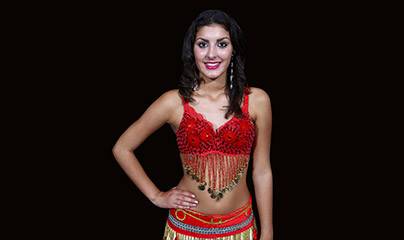 "Oriental dance, it’s easy !", "Belly dance is vulgar"... Because our boutique will always campaign to stand up and...Read more
 -
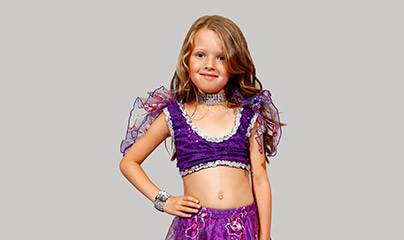 Enjoy the cute interview of a young dancer who explains in her own words why she loves oriental dance. We love it !Read more
 -
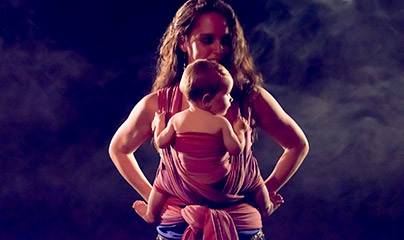 Bellydance classes only for expectant and new mothers: Why? How? Where ? Sarah COLIN, a well-known Bellydance teacher...Read more
 -
 We sometimes hear everything and anything about Bellydancing. Today, BellydanceDiscount.com separates for you fact...Read more
 -
 Between funny anecdotes and real life experiences, you will love and necessarily identify with this column written...Read more
 -
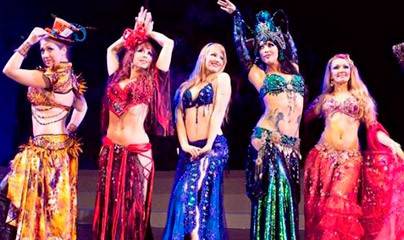 Emotion, technique, staging, music, costumes. To ensure a perfect dance choreography, you need to work on each of...Read more


Leave a comment
Login to post comments