


 Mirrors, luggage, garment bags, thermos flasks...
 Floor mats, gym bags, reusable bottles, bricks…


 Gift vouchers


Oriental tango: An exceptional fusion between oriental dance and tango
Thanks to Yuliya, belly dancer and teacher, for answering our interview in a precise and detailed manner, and so providing in her story valuable advice for the successful direction of an oriental tango choreography.
How was the idea and desire to offer a fusion workshop between oriental dance and tango born?
 Tango is one of my great passions. I fell in love with it when I was living in Italy for my studies 10 years ago. I took lessons and immersed myself in the nightlife milonga parties in Milan to practice. After I moved to France, in Paris, but never stopped practicing tango. Then my passion for Bellydance quickly took over, but the one for tango never left me.
This fusion project between tango and oriental dance has been maturing for a long time and the idea of organizing a workshop on this theme came to me spontaneously. I had inspiring songs in mind and the desire to share both my passions simultaneously.
In your opinion, what are the peculiarities and characteristics of Bellydance on one hand and tango on the other hand? What is your objective by merging these dances and what type of choreography do you put in place?
Oriental dance is a solo or group dance, while tango is mainly a partner dance (except in choreographic creations for the stage). But I find Bellydancing and tango to be 2 very emotional and expressive dances which involve an "internal energy" and deep feelings.
When it comes to oriental dance, this "internal energy" allows us to self connect, understand our life story and emotions better, free ourselves from the look of others and communicate with our audience our personal experiences or interpretations through dance. Regarding the technique, Bellydance is richer in the possibility of practicing the pelvis, hips, arms' movements, and different isolations of body parts.
For the tango, this "internal energy" is expressed through the connection with the other, our partner. It is an experience which teaches us a lot about ourselves and our personality. Tango is a listening and a balance for 2 with a freedom of expression dependent on the other. Regarding the technique of tango, the focus is on the leg and foot work which is very rich, expressive, and elegant. Another fundamental element is the importance of each partner's balance and the awareness of the body weight at all times, ours and that of our partner.
The fusion between oriental dance and tango is very interesting especially for the bellydancer because the technical leg and foot work allows us to develop the elegance and placement of the latter, as well as to work on the development of a strong balance essential for a precise and well controlled dance.
My oriental tango choreographies combine basic tango techniques placed into Bellydance sequences and movements. Movements are sometimes inspired by tango and then adapted for oriental dance and vice versa, creating the fusion between both dances.
What is the perfect dance costume and the right type of music for practicing oriental tango? Can you give us some music titles?
There is no such thing as a "typical" costume for dancing an oriental tango fusion.
In my opinion the most important thing is to offer visibility in terms of legwork, and have an elegant style. A complete oriental look or a 100% tango outfit does not work. Ideally, it is better to combine oriental dance clothes with tango clothes to create a "tailor-made" costume which will highlight both disciplines and underline the "mix" between both dances.
Why not choose, for example, a skirt or a tango dress and add emblematic oriental dance elements (scarf for the hips, sequins, rhinestones…)? I think it all depends on what you want to create as a universe around the choreography in question... and the dance costume will undoubtedly have to answer that.
An oriental tango can perfectly be danced to a tango music which inspires us. But you can also look for versions of tango music interpreted by oriental musicians. These interpretations add an oriental note due to some of the instruments used. So the titles "La cumparsita", "El tango de Roxanne" and "Jealousy" (in tango version) work well with this fusion.
What other fusions with Bellydance do you like and why?
I like all fusions because for me, fusion is a way to open up to other styles, learn a new dance, be creative, and go beyond the limits of a particular dance style. The fusion also makes it possible to transport and make the audience travel in worlds totally different from the oriental dance's one.
I find the fusions with classical dance and contemporary dance very interesting because these are dances famous all over the world and not often associated with Bellydance.
I also particularly appreciate the fusion with flamenco (Flamencoriental) for the power it brings to oriental dance.
What are your artistic career highlights in dance?
The biggest step in my artistic journey was the opportunity to participate twice in the famous Bellydance Evolution shows.
Ever since I started oriental dancing, my dream was to be able to dance in one of these shows, but I never imagined that I would one day. I never felt ready… Then one day after much thought, I said to myself, you have to give it a try! So I signed up a first time for the casting of the show "Fantasm 1001 nights" in 2017.
I was not chosen but was then able to attend an artistic development program during the intensive rehearsal week with the dancers recruited for the show, and with Jillina Carlano and her co-directors. This experience taught me a lot in a very short time, and above all, I understood how to work on my dance to be ready for the next castings. It brought about a radical change in my training and preparation, which I never gave up.
Then I told myself that I will apply to all castings no matter how many times I fail, until I am chosen! To my surprise, I was selected for the next audition that same year (2017). I was then able to work in very professional conditions I had never experienced before, and dance in a theatrical show with a group of professionals from all over the world. It was for me a real treasure of learning, not only in terms of dance but also in terms of the show's structuring and organization, the teamwork and coordination with extreme precision, the rehearsals' management, the staging and artistic direction, but also the human relations of a group of artists giving the best of themselves to succeed in a show with just 1 week of rehearsing together.
That year, I also auditioned to join the Kazafy troupe France. Learning the Reda style and his choreographic work, thanks to Mohamed Kazafy, was a fundamental step in my artistic journey.
What obstacles did you encounter to become an oriental dancer and teacher? And how did you overcome them?
When I started belly dancing, I never thought of becoming an oriental dance teacher or dancer someday. I was dancing because dancing gives me so much pleasure and as I went through my experiences, I had unexpected opportunities.
I started teaching because I had the opportunity to fill in for my oriental dance teacher in Paris (Sawsan Alsafadi), when she was on maternity leave. I will always be very grateful to her for her trust and encouragement as my biggest obstacle has always been my lack of self-confidence. So I had to work a lot on this point in order to manage it better and be able to overcome it on a daily basis. This, while continuing to train in dance and "forcing" myself to get out of my comfort zone through competitions, open stages, castings...This is also how I filled in for my Bellydance teacher and "mentor" Kaouther Ben Amor during her maternity leave. It was a real test because I'd put a lot of pressure on myself. Indeed, I find it much more difficult to replace a teacher with her students' expectations, than to teach your own classes.
My main problem during this period was the time available in a day. In fact, I had to manage to teach my own oriental dance lessons, those I had as a substitute, my own rehearsals, those with the Kazafy troupe France, and my job as a landscaper. As a result, I had to be extremely organized to have time to combine all of this with my oversized demanding nature. But it was also beneficial in the sense that it allowed me to know my limits, learn to say no to some opportunities, and give a little more space to my personal dancing projects. I also learned to deal more calmly with my perfectionism and self-criticism.
Which oriental dancer makes you dream and why?
I love the different worlds and artistic work of many belly dancers so for me it's impossible to name just one!
I am of course an admirer of the various oriental dance teachers I have studied with for a long time or just been able to take workshops with from time to time.
The first person who inspired me a lot when I started, and continues to inspire me to this day, is Jillina Carlano. She keeps on surprising me by always offering projects which push oriental dance into an exceptional theatrical evolution.
I also love the world of Kaouther Ben Amor. She is very generous in sharing her emotions through her interpretations which remind me of the Egyptian Golden Age.
Salma Ben also transports me to the Golden Age with her sublime elegance.
I love Nesma al Andalus for her refined and expressive style.
And speaking of expressiveness, I also admire Hind Taoufiq for her raw and unique expressions!
One of my discoveries thanks to the lockdowns is Shahrzad, a superb oriental dancer with a powerful technique.
I can also name Samia Gamal for her fluidity and authenticity, Nagwa Fouad for her more modern world and original scenes. But the list is very long with dancers like Mercedes Nieto, Dina, Saida Helou, Mahaila el Helwa, Julia Farid…
I can't name all the sublime oriental dancers I love and who inspire me, there are so many of them! Each of them has something unique which moves, amazes, and invites me to find my own path.
Discover Yuliya in a video:
Related posts
-
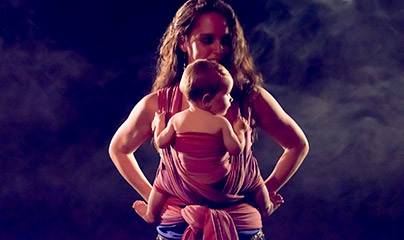 Bellydance classes only for expectant and new mothers: Why? How? Where ? Sarah COLIN, a well-known Bellydance teacher...Read more
 -
 Between funny anecdotes and real life experiences, you will love and necessarily identify with this column written...Read more
 -
 Ann-Gaëlle LE BIHAN, teacher, tells us everything concerning this new discipline inspired by Bellydancing which...Read more
 -
 Passion, frustration, fear, pride, well-being... Being a dancer is to ensure one's performance but also juggle with...Read more
 -
 It's decided, your passion for Bellydancing is overflowing and you want to start your career as a professional...Read more
 -
 Discover the fascinating path of VAINA who practices her passion and job in Dubaï. A unique place and she shares with...Read more


Leave a comment
Login to post comments