


 Mirrors, luggage, garment bags, thermos flasks...
 Floor mats, gym bags, reusable bottles, bricks…


 Gift vouchers


Caroline CHÂTEL, oriental dance for destiny
Thanks to Caroline CHÂTEL, Bellydance teacher in Bordeaux (France), for sharing with us her passion for oriental dance but also her enthusiasm both for the country that initiated this art (Egypt) and for other truly beneficial activities to any oriental dancer.
What is your background as an oriental dancer and teacher?

I discovered Bellydance in early 1991 when I came to France to study languages at the University of Bordeaux. Originally from Saint-Pierre-et-Miquelon (French archipelago near Newfoundland in Canada), I had to leave my native island after high school to continue my studies.
Once settled in Bordeaux, I keep on taking classical and modern jazz dance lessons, but I fell in love with oriental dance thanks to student friends from Djibouti; they were my first teachers! They first introduced me to Yemeni dances (some steps and gestures look like the khaligy dance) and then to what they called "raqs masri": the Egyptian dance. Captivated by their dance's beauty, musical tapes of Amr Diab and Oum Kalthoum in hand (oh yes, we are talking about a completely different generation…), here I am abandoning Brian Adams and Pat Benatar to discover a musical universe totally new and enchanting!
Wanting to study the subject deeper, I then looked for an oriental dance school in Bordeaux… without success. However, there were Kabyle dance classes given by a certain Samia and I loved going there.
At the end of my studies, I decided to travel to Paris often to take Bellydance lessons with different teachers, including Leila Haddad, Ottilie Eucher, and Zaza Hassan. I then discovered Sana and attended all her workshops, her teaching was exceptional.
I started to perform in Bordeaux, especially with orchestras from the region, then word of mouth was my best advertising. Indeed, there was no internet at the time or even a business card, I just gave a telephone number, I was nicknamed "The Canadian".
The year 2000 was an essential turning point in my career as an oriental dancer because it was the first time that I discovered Egypt. I then decided to fully immerse myself in this country and go there regularly to take oriental dance lessons, see the Egyptian dancers, the Reda troupe, study Arabic, have my Bellydance costumes made. I literally fell in love...
I also discover Beata and Horacio Cifuentes, Yousry Sharif and went to take their courses in Paris, New York, Berlin. Their teaching feeds me, gives me a good foundation.
At the end of 2002, I had to make a decision because I was planning to become an English teacher and eventually return to live on the archipelago. The passion takes over and I launch myself into opening the first studio dedicated to oriental dance in Bordeaux.
Last year, we celebrated my school's 20th anniversary! If one day someone had told me that all this was going to happen, I would not have believed it!
You regularly give Bellydance's workshops, which themes are your favorite ones and why? Are you more "tradition", "fusion" or "innovation/modernity"?
In the oriental dance workshops that I offer in Bordeaux (twice a month as well as summer workshops), I favor themes more related to Egypt such as Saidi, Ghawazi, and Drum solo, very popular with students! I like to offer workshops on oriental rhythms because I find it interesting for bellydancers to recognize the rhythms used in oriental dance. A workshop can be an opportunity to address a theme related to the Egyptian musical culture, so rich and vast. Dancing to a classical music by Abdel Halim Hafez will be totally different than dancing to music by Ahmed Adaweya. In addition, I will always take advantage of the workshops to provide explanations on a dance's origin, the biography of a singer or a dancer known in Egypt, whether they come from the oriental dance's golden age or are more contemporary. What I feel is important is that the student embraces a culture through this magnificent discipline that is oriental dance.
Being passionate about Egypt, it is true that I always tell my beginners that I hope to make them love not only a dance but also a country. Maybe that's why I'm going less towards fusion even if I find it beautiful to watch. The only fusion I would like to try one day would be the flamenco oriental fusion.
When it comes to the more modern aspect of Bellydance as it is often presented, you should know that the Isis wings, like the veils for that matter, are not linked to ancient rites. The fan veils are completely foreign to Egypt and its heritage, but I must admit that it can enhance a dance, give variety to a gala. However, I believe that the oriental dance teacher who uses these accessories in class or in a workshop should mention that it is not specific to the oriental style but that they are recent innovations brought from the West. If need be, he misleads the student and audience.
To sum up, you may have understood, I am rather "tradition" in my oriental dance's teaching.
You also organize stays in Egypt on the Bellydance's theme. What are the participants looking for in this kind of successful formula?
Indeed, having more experience and confidence thanks to several trips to Egypt, it seemed obvious to me to bring groups to share with them my love and knowledge of the country, of the oriental dance's world, and my vision of Egypt. This new adventure started in 2014 !
I take small groups (5-7 participants) to my friend and colleague Yasmina's home in Giza; she has a beautiful venue where you can dance, see the pyramids, and find a haven after wandering the streets of Cairo. The participants like these stays where we are in small groups because they are looking for both intimacy and friendliness. They also have the opportunity to take oriental dance lessons with teachers (Egyptian or foreign living in Cairo). What they also particularly appreciate is being able to be immersed in the Bellydance's world while going sightseeing: taking a course, attending traditional dance and music performances, visiting specialized seamstresses, having the oriental dance outfit of their dreams made!
I am happy and grateful to see that some participants come back year after year, which is a mark of great trust.
I now offer trips in Egypt related to oriental dance where I combine Cairo and other regions of the country, especially South Sinai which I know well. And as I like to innovate, I am thinking of offering tours in other regions in the near future.
You have diversified into other activities (in particular Yin Yoga, Pilates), do you believe that oriental dance alone is not enough to seduce? Has it become difficult to make a living from it nowadays?
I mainly wanted to diversify my activity because I needed to feel stimulated by other projects. I started to practice Pilates around 2007-2008. Totally convinced of the method's benefits, I later trained in a specialized organization in order to be able to teach it legally. In fact, this activity is much more supervised and legislated than oriental dance. Today I teach 4 weekly Mat Pilates classes and a Yin Yoga class. Just like for Bellydance where I train for life, I always have a thirst for learning and renewing myself in these two new disciplines that I teach.
People attending the Pilates and Yin Yoga classes are my oriental dance students as well as new students who come only for these 2 disciplines. I make sure that the lessons are studious and friendly!
To what extent do these other activities complement Bellydance?
Due to the physical and mental well-being that a regular practice of Pilates brings, this method is beneficial to all and more particularly to us, dancers, because it is an excellent physical preparation. In fact, with this activity we strengthen the deep muscles which are the stabilizing muscles necessary to have a healthy back. It is also very beneficial for our posture and improving flexibility. We feel different in our supports and movements, sheathed after having done a Pilates session. Please note that at the time Joseph Pilates was developing his method in New York, his first students were Martha Graham's dancers (American dancer and choreographer considered as one of modern dance's greatest innovators and therefore the founder of contemporary dance).
Yin Yoga, different from Pilates (and any other form of yoga for that matter) which can be described as "praising slowness" allows you to reconnect with yourself and work on muscle relaxation. When practicing Yin Yoga, we stay in each posture between 3 to 5 minutes in order to reach the connective tissues or fascias. So, this practice regenerates them, improves flexibility, frees the mind. It is complementary to any physical activity because of the benefits it provides.
If life gave you the opportunity to go back and change some actions, situations or decisions related to oriental dance; what would you change and why?
For nothing in the world would I change anything because my journey and this adventure have nourished me all these years and continue to animate me today.
Nothing is simple in running a Bellydance school but the passion stays the same after all these years!
Transmission and creativity are truly an integral part of my life, it is what makes me vibrate.
I still have a lot of projects for my school as well as for my students in oriental dance, Pilates and Yin Yoga, I trust life and let myself be guided by my intuitions and desires!
Discover in a video Caroline CHÂTEL and her "glam'Orient" dance company in this superb frenzied drum solo:
Posted in: Oriental dancers
Related posts
-
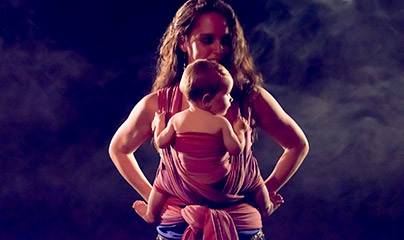 Bellydance classes only for expectant and new mothers: Why? How? Where ? Sarah COLIN, a well-known Bellydance teacher...Read more
 -
 Between funny anecdotes and real life experiences, you will love and necessarily identify with this column written...Read more
 -
 Passion, frustration, fear, pride, well-being... Being a dancer is to ensure one's performance but also juggle with...Read more
 -
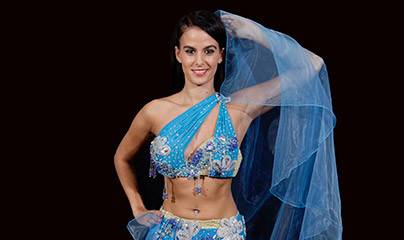 It's decided, your passion for Bellydancing is overflowing and you want to start your career as a professional...Read more
 -
 Discover the fascinating path of VAINA who practices her passion and job in Dubaï. A unique place and she shares with...Read more
 -
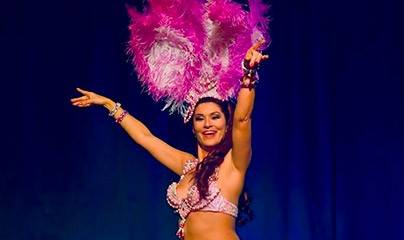 Fall for this amazing and festive merger, “Bellysamba”, through the account of Hayal, bellydancer and teacher.Read more


Leave a comment
Login to post comments